The Drink Quietly Challenging Beer: Global Cider Market to Reach USD 26.9 Billion as Premium Alcohol Trends Reshape the Beverage Industry, Says Maximize Market Research
PUNE, India, March 5, 2026 /PRNewswire/ -- For decades, beer has dominated the global drinking culture. But a quiet challenger is beginning to reshape the alcoholic beverage landscape.
Across pubs in the United Kingdom, craft taprooms in North America, and rapidly expanding beverage markets in Asia, cider is undergoing one of the most surprising comebacks in the global alcohol industry.
What was once viewed as a traditional apple-based drink is now evolving into a premium, innovation-driven beverage category fueled by shifting consumer preferences, craft beverage experimentation, and the global trend toward lighter, fruit-based alcohol.
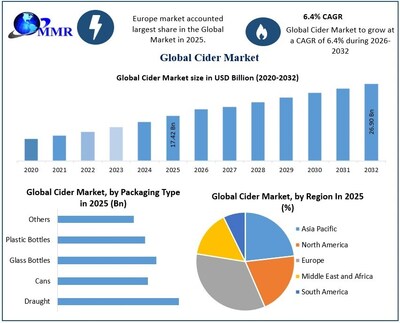
According to new industry analysis by Maximize Market Research, the Global Cider Market was valued at USD 17.42 Billion in 2025 and is projected to reach nearly USD 26.9 Billion by 2032, expanding at a CAGR of around 6.4% during the forecast period.
But the real story behind the numbers is not just market growth — it is a fundamental shift in global drinking behavior.
Get Full PDF Sample Copy of Report: (Including Full TOC, List of Tables & Figures, Chart) @ https://www.maximizemarketresearch.com/request-sample/27300/
A Generational Shift in Drinking Habits
The global alcohol industry is entering a period of profound change.
Millennial and Gen-Z consumers are increasingly moving away from traditional alcohol categories and experimenting with beverages that offer natural ingredients, unique flavors, and lower alcohol intensity.
Cider sits perfectly at the intersection of these evolving preferences.
Unlike many traditional alcoholic beverages, cider offers a fruit-based profile, lighter taste, and broad flavour experimentation, making it particularly attractive to younger consumers seeking new drinking experiences.
This shift is already reshaping beverage menus across major cities worldwide, where cider is increasingly appearing alongside craft beer, hard seltzers, and ready-to-drink cocktails.
From Traditional Drink to Global Lifestyle Beverage
Historically, cider consumption was concentrated in a handful of regions, particularly the United Kingdom, Ireland, and parts of Western Europe, where apple fermentation has long been part of cultural traditions.
Today, however, cider is evolving beyond its regional identity and emerging as a global lifestyle beverage category.
The rise of craft beverage culture has introduced hundreds of new cider brands across North America and Europe, while expanding middle-class populations in Asia are creating new opportunities for premium alcoholic beverages.
As a result, cider is no longer simply competing with beer — it is becoming part of a broader premium alcohol movement reshaping the global beverage industry.
The Craft Beverage Revolution Is Fueling Cider's Growth
Few forces have transformed the alcohol industry as dramatically as the craft beverage movement.
Consumers today increasingly value authenticity, artisanal production methods, and distinctive flavor experiences.
Cider fits naturally into this trend.
Craft cider producers are experimenting with an extraordinary range of ingredients and production techniques, introducing beverages infused with berries, tropical fruits, botanicals, spices, and even barrel-aged fermentation processes.
These innovations are expanding cider far beyond traditional apple-based drinks and helping brands attract consumers seeking more adventurous and premium drinking experiences.
Get Insightful Data on Regions, Market Segments, Customer Landscape, and Top Companies (Charts, Tables, Figures and More) https://www.maximizemarketresearch.com/request-sample/27300/
Why Global Beverage Giants Are Betting on Cider
Recognizing the category's potential, major beverage companies are increasingly investing in cider.
Global industry leaders such as Heineken, Carlsberg Group, Molson Coors, and C&C Group have expanded their cider portfolios as part of broader strategies to diversify beyond traditional beer markets.
For large beverage companies, cider represents more than just a new product category. It offers a strategic opportunity to capture consumers who are seeking alternatives to conventional alcoholic drinks.
This shift is also reshaping the competitive landscape, where multinational beverage corporations now compete alongside a vibrant ecosystem of craft cider producers and regional brands.
Innovation Is Redefining the Category
Product innovation has become one of the most important growth engines in the cider industry.
While apple cider continues to dominate global consumption, producers are increasingly launching fruit-infused, botanical, organic, and low-calorie variants to attract health-conscious and experimental consumers.
Some premium brands are also introducing barrel-aged cider and specialty fermentation techniques, creating products that rival the complexity and sophistication of craft beers and fine wines.
This wave of innovation is transforming cider into a dynamic beverage category capable of competing across multiple segments of the alcohol industry.
Europe Leads the Market, but Asia Is the Next Frontier
Europe remains the global center of cider production and consumption, with the United Kingdom representing one of the largest cider markets in the world.
However, the next wave of growth is expected to come from North America and Asia-Pacific, where rising urban lifestyles, expanding retail networks, and growing disposable incomes are accelerating demand for premium alcoholic beverages.
For cider producers, these markets represent enormous untapped opportunities.
Strategic FAQs
As the market expands, several critical questions will shape the future of the cider industry:
Can cider compete with beer and ready-to-drink beverages in global markets?
Which regions will drive the next decade of cider consumption growth?
Will craft cider brands reshape the global alcohol landscape?
How will sustainability influence apple sourcing and production?
Can cider brands successfully expand across emerging Asian markets?
The answers to these questions will determine whether cider remains a niche category — or becomes a major pillar of the global alcohol industry.
Explore the Full Report
To explore detailed insights, growth forecasts, competitive analysis, and strategic opportunities in the global cider industry, visit: https://www.maximizemarketresearch.com/market-report/global-cider-market/27300/
Related Reports
Global cider packaging market: https://www.maximizemarketresearch.com/market-report/global-cider-packaging-market/27241/
Organic drinks market: https://www.maximizemarketresearch.com/market-report/organic-drinks-market/221244/
Global apple cider vinegar market: https://www.maximizemarketresearch.com/market-report/global-apple-cider-vinegar-market/98303/
Beer kegs market: https://www.maximizemarketresearch.com/market-report/beer-kegs-market/199833/
Global Fruit & Vegetable Processing Enzymes Market: https://www.maximizemarketresearch.com/market-report/global-fruit-vegetable-processing-enzymes-market/120093/
About Maximize Market Research
Maximize Market Research is a global market research and consulting firm providing strategic intelligence, market forecasts, and competitive analysis across sectors including food & beverages, chemicals, manufacturing, healthcare, energy, and technology.
The firm supports corporate decision-makers with data-driven insights and consulting-grade research designed to enable informed strategic decision-making.
Contact:
Lumawant Godage
MAXIMIZE MARKET RESEARCH PVT. LTD.
+91 96073 65656
Email: sales@maximizemarketresearch.com
Content Source: https://www.maximizemarketresearch.com/market-report/global-cider-market/27300/
Visit Our Web Site: https://www.maximizemarketresearch.com/
LinkedIn.com: https://www.linkedin.com/company/maxmize-market-research-pvt-ltd/
Instagram: https://www.instagram.com/maximizemarketresearch/
Facebook: https://www.facebook.com/maximizemarketresearch/
X (Twitter): https://x.com/MMRAnalytics
Infographic - https://mma.prnewswire.com/media/2927167/Cider_Market.jpg
Logo - https://mma.prnewswire.com/media/2457992/4896454/Maximize_Market_Research_Logo.jpg

 View original content: