The AI Productivity Paradox: YuLife Research Finds AI Driving Rising Pressure in UK Workplaces
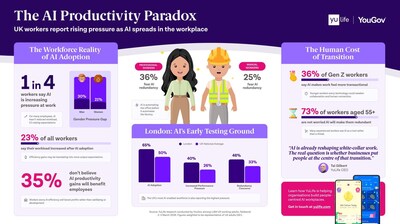
- White-Collar Anxiety: ABC1 workers 36% more likely to fear AI redundancy than C2DE workers (36% vs 25%).
- The Trust Gap: One-third of professionals who use AI tools for work (32%) do not believe AI productivity gains will be reinvested in staff wellbeing.
- London as the 'Canary in the Coal Mine': The capital shows the highest AI adoption (65% of workers) and the highest where workplace pressure has increased among those who use AI (40%)
LONDON, March 12, 2026 /PRNewswire/ -- New research from YuLife, the AI-forward insurtech, reveals a growing "AI productivity paradox" with workers reporting rising pressure and uncertainty even as companies invest heavily in artificial intelligence.
The study, conducted by YouGov among 1,184 UK workers, suggests AI is beginning to reshape white-collar work but not always in the way many expected.
The survey found that one in four workers (26%) who use AI tools in their workplace say AI is increasing pressure at work, while over one in five (23%) report that their workload has actually increased since AI tools were introduced.
While the technology promises major efficiency gains, the data shows many workers feel the benefits may not be shared equally.
ABC1 Workers Feel the Greatest Risk
The research identifies a striking divide between social grade workers.
In what may represent a reversal of traditional automation patterns, 36% of ABC1 professionals who use AI tools in their main workplace say they worry AI could make their job redundant, compared with 25% of C2DE workers that are using AI.
Historically, automation has tended to disrupt manual labour first. The findings suggest AI may increasingly affect knowledge work and professional roles.
However, concern about job displacement is not universal across the workforce. Among workers aged 55+ who use AI tools in their workplace, 73% say they are not concerned that AI will make their role redundant within the next five years.
Even among older workers, adoption is growing. 22% of employees aged 55+ report using AI tools for writing and editing tasks such as drafting emails or summarising reports.
The Productivity Dividend Gap
The research also highlights a growing "trust gap" between employees and employers around how the benefits of AI will be shared.
Despite significant investment in AI across many organisations, 35% of professionals who use AI tools in their main workplace say they do not believe productivity gains from AI will be reinvested into their employee wellbeing or development.
"We are navigating a generational shift in how people work," says Tal Gilbert, CEO of YuLife. "The real question isn't whether AI will reshape white-collar roles because that is already happening. The challenge is whether we shape that transition deliberately, with people at the centre, or allow short-term efficiency economics to dictate the terms. Our research suggests too many employers have yet to strike that balance. At this scale of change, getting this right is too important to leave to chance."
London: High Adoption, High Attrition Risk
The data suggests London is acting as the UK's early testing ground for AI-driven workplaces. AI adoption in the capital is significantly higher than the national average, with only 35% of London workers saying they do not use AI at work compared with 50% of workers nationally.
However, this rapid integration is also associated with higher pressure:
- 40% of London workers who use AI tools report increased performance pressure due to AI (vs 26% nationally)
- 46% of workers use who use AI tools are concerned about AI-driven redundancy in the next 5 years (vs 34% nationally)
- 39% say their workload has increased since AI tools were introduced
Workplace Pressure and Connection
The research also suggests AI may be changing workplace dynamics.
Men are significantly more likely than women to report increased performance pressure from AI (30% vs 21%).
At the same time, 36% of aged 18-28 Gen Z workers who use AI say AI is making workplace interactions feel more transactional, raising questions about how technology is reshaping collaboration and connection at work.
About the Research: All figures, unless otherwise stated, are from YouGov Plc. Total sample size was 2,088 adults, of which 1,184 are working adults. Fieldwork was undertaken between 2nd - 3rd March 2026. The survey was carried out online. The figures have been weighted and are representative of all UK adults (aged 18+).
About YuLife
YuLife is an AI-forward insurtech redefining employee benefits for the way people live and work today. YuLife brings health and insurance together in a single experience that inspires people to live healthier lives. By turning small daily actions into lasting habits, rewarding progress, and offering personalised support when it matters most, YuLife helps people understand and use their benefits as part of everyday life, not just when they need to make a claim.
That ongoing engagement generates insight at scale. For employers, it supports healthier, more resilient workforces and helps maximise the value of benefits spend. For insurers, it provides a clearer view of population health, enables earlier and more predictable intervention, and supports more sustainable risk management. For advisers, it helps turn insight into clearer advice, aligning employers and insurers around better risk outcomes.
Partnering with leading insurers, including Bupa, MetLife and Old Mutual, YuLife operates globally and supports millions of people worldwide. Founded in 2016 and headquartered in London, YuLife is backed by investors including Creandum, LocalGlobe and Dai-ichi Holdings. For more information, visit www.yulife.com.
PRESS CONTACT:
Leah Stern
PR @Yulife
leah.stern@lovebeingyu.com
+44 747 019 6826
Photo: https://mma.prnewswire.com/media/2932350/YuLife_YouGov_AI_Productivity_Paradox.jpg
 View original content:https://www.prnewswire.co.uk/news-releases/the-ai-productivity-paradox-yulife-research-finds-ai-driving-rising-pressure-in-uk-workplaces-302712110.html


,regionOfInterest=(955,281)&hash=27c131b7533e2d4916860cc04ae4112762ad11c6c6490fc505e779e190a65bcd)