Sigenergy, Arausol and Memodo realize Germany's largest DC-coupled PV plant with decentralized storage
SHANGHAI and SCHORNDORF, Germany, April 10, 2026 /PRNewswire/ -- Sigenergy, a leading energy innovator, is entering the market for utility-scale photovoltaic systems in Europe. Together with Baden-Württemberg/Germany based PV specialist Arausol, and the European distributor Memodo, it is building Germany's largest PV plant with decentralized storage systems that operate on direct current (DC).
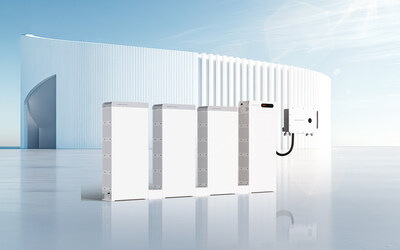
The project in Weissach im Tal is currently under construction and will have an installed peak PV capacity of 11.6 MWp and a battery capacity of 20 MWh. This capacity is distributed across 1,660 Sigenergy battery modules, each with a capacity of 12 kWh, which are securely installed in stackable SigenStacks. Unlike large-scale batteries, they are deployed in a decentralized manner.
Installing SigenStacks on Arausol mounting structure—similar to PV module racks—is quick, easy, and safe, requiring no complicated cabling or the use of cranes or other heavy equipment. The solution thus avoids soil sealing, which is common in projects involving large central batteries housed in containers.
DC Coupling and AI: more power, more renewable electricity and higher revenues
Compared to AC-coupled systems, the system eliminates the need for multiple conversions between DC and AC. Instead, excess photovoltaic DC power is fed directly into the batteries and converted to AC via the inverters only when it is time to feed power into the grid. DC coupling thus increases the overall system's efficiency—by at least 4%. It also eliminates the need for duplicate inverter infrastructure.
The DC mode also allows Arausol to increase the output of the PV system, further enhancing the project's economic viability.
Less Need for Grid Expansion
In comparison, AC-coupled systems have technical limitations. As a result, consistent use of DC coupling for large-scale PV projects would allow for a smaller-scale expansion of the power grids required for Germany's energy transition. This would also help keep costs low for electricity customers.
In addition to storage systems and inverters, Sigenergy is supplying Arausol with other electrical components, such as medium-voltage transformer stations equipped with pre-installed low-voltage connections. Memodo ensures reliable procurement through its delivery capability and market expertise. Arausol is responsible for the construction and project management, in addition to providing the substructures from its own facilities. Grid connection is scheduled for July 2026.
Partnership for cutting-edge technology
"This project sends a clear message: DC coupling enables utility-scale energy systems to be built faster, smarter, more efficiently, and in a more environmentally friendly way," explains Emanuel Spahrkäs, Senior Account Manager at Sigenergy. "By combining Sigenergy's unique DC-coupled solution with a decentralized battery architecture and Arausol's easy-to-install mounting system, we achieve faster commissioning, higher performance, and lower operating costs."
Jaime Arau, CEO and founder of Arausol, said: "As a leading systems integrator and project developer for photovoltaic systems, we are committed to implementing the latest technology. Thanks to its innovative DC coupling, Sigenergy is an ideal partner for realizing this goal."
Memodo emphasized its strategic role in the project, highlighting early-stage collaboration and technology alignment. The company worked closely with the customer to define the system architecture and position Sigenergy as a suitable partner. "Our strength lies in actively bringing innovations to the market and supporting projects across the entire value chain," said Jonas Hollweg, Head of Sales at Memodo. "The project underlines the potential of close and strategic cooperation between manufacturers, project developers and distributors in delivering advanced energy solutions."
Photo - https://mma.prnewswire.com/media/2953728/SigenStack.jpg
 View original content:https://www.prnewswire.co.uk/news-releases/sigenergy-arausol-and-memodo-realize-germanys-largest-dc-coupled-pv-plant-with-decentralized-storage-302739165.html