DEEPX and Hyundai Motor Group Robotics LAB Partner to Develop Next-Generation Physical AI Compute Platform for Robotics
Collaboration targets DX-M2-based robotic AI infrastructure, expanding into VLA and VLM technologies for next-generation intelligent robots
SEOUL, South Korea, April 21, 2026 /PRNewswire/ -- DEEPX (CEO Lokwon Kim), a pioneer in ultra-low-power AI semiconductor technology, and Hyundai Motor Group's Robotics LAB have announced a strategic collaboration to jointly develop a next-generation Physical AI computing platform for advanced robotics.
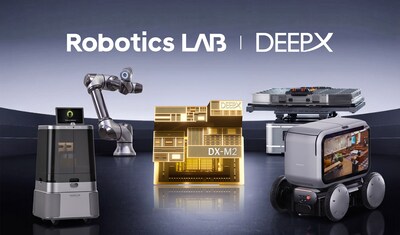
The partnership aims to co-develop an AI computing architecture capable of running large-scale generative AI models in real time within robotic systems. This goes beyond a simple technology exchange — it is a strategic effort to jointly architect core computing infrastructure for next-generation robot platforms.
The robotics AI field is increasingly centered on Vision-Language-Action (VLA) and Vision-Language Model (VLM) technologies — enabling robots to perceive surroundings via cameras, understand natural language commands, and make autonomous decisions. These capabilities are essential to transforming robots from simple automated machines into intelligent systems that can see, understand, and act.
To enable stable deployment of these capabilities, the two companies will collaborate across four key areas: ultra-low-power AI semiconductor architecture, AI computing hardware systems for robotics, Physical AI software stack, and robotics application AI libraries.
At the heart of this collaboration is DEEPX's next-generation chip, the DX-M2 — a Physical GenAI semiconductor designed to run large-scale AI models in ultra-low-power environments, enabling on-device AI inference in robotics, autonomous mobile systems, and industrial automation.
The Physical AI semiconductor market is projected to reach approximately $123 billion by 2030, with robotics and humanoids as primary demand drivers. DEEPX and Hyundai Motor Group Robotics LAB have been jointly developing low-power 'edge brain' technology for robotics over the past three years.
"The AI industry is rapidly shifting from data center-centric models to a Physical AI era. Ultra-low-power computing capable of running AI in real-world systems will become the core infrastructure. DEEPX aims to become the global leader in Physical AI computing platforms powering AI across robotics and industrial systems."
— Lokwon Kim, CEO, DEEPX
"In the era of Physical AI, robots are becoming the closest point of contact between AI technology and people. At Hyundai Motor Group Robotics LAB, our goal is to create robots that can naturally coexist with humans — and to achieve this, we are strategically building a core technology ecosystem in collaboration with specialized partners worldwide."
— Dong Jin Hyun, Vice President, Head of Robotics LAB, Hyundai Motor Group

Photo - https://mma.prnewswire.com/media/2961160/image.jpg
Logo - https://mma.prnewswire.com/media/2857355/5927209/DEEPX_Logo.jpg
 View original content:https://www.prnewswire.co.uk/news-releases/deepx-and-hyundai-motor-group-robotics-lab-partner-to-develop-next-generation-physical-ai-compute-platform-for-robotics-302747869.html