Clarins' newly opened Longevity Research Center translates 30 years of skin science into lasting beauty
PARIS, June 18, 2026 /PRNewswire/ -- Clarins has created the Dr Olivier Courtin Clarins Longevity Research Center to shape the future of longevity science. For 30 years, through sustained investment in longevity research and innovation, Clarins has converted foundational science into measurable impact: 10 patents, 13 peer reviewed publications, and 12 scientific collaborations with leading international institutions. Under the guidance of Dr. Olivier Courtin Clarins and in keeping with Clarins' unique holistic beauty approach, this new Research Center will deepen the understanding of the definitive factors that accelerate skin ageing and continue to chart how cumulative lifestyle decisions shape wellbeing through the decades.

The Center will be led by an international scientific committee under the chairmanship of Dr. Olivier Courtin Clarins. It will assemble a multidisciplinary team of global experts — specialists in ageing biology, dermatology, epidemiology, behavioral science, biomedical engineering and data science — united around a single goal: to rethink longevity research for real world impact.
From its two locations — Clarins' Paris headquarters and Laboratories in Pontoise — its core missions will include:
- Strategic direction for Clarins Research — map out bold, forward looking research territories and axes in longevity, guided by current discoveries and emerging societal needs.
- Launch and oversee doctoral and postdoctoral programs in longevity, in close partnership with national and international universities and research institutes.
- Share discoveries widely — through publications, symposia and focused workshops — to inform both the scientific community and key stakeholders.
"Today the science of longevity allows us to greatly influence the behavior of skin, and I imagine it will undoubtedly reverse it sometime in the future. The strength of this science is that we can cultivate both beauty and skin health in a truly proactive way," says Dr Olivier Courtin Clarins.
From epigenetics to empowerment
Inspired by the pioneering work of Joël de Rosnay in the 1970s, showing that roughly 15% of gene expression is fixed by inheritance while 85% may be shaped by lifestyle and environment, the Longevity Research Center embraces epigenetics as the scientific cornerstone of its mission. This perspective reframes ageing as a dynamic process that can be influenced by informed daily choices, not merely an immutable fate.
"Our lifestyle has a direct impact on gene expression, chronic inflammation, oxidative stress, mitochondrial function and cellular repair. The skin is an excellent reflection of these dynamics. It is simultaneously a barrier organ, an immune organ and a visible marker of our overall physiological state. Skin that ages more quickly can indicate a deeper imbalance: inflammation, chronic stress, poor sleep, inadequate nutrition or excessive environmental exposure. Today, longevity therefore relies on an integrative approach: diet, physical activity, stress management, emotional health, prevention and, of course, skin care," says Dr Olivier Courtin Clarins.
From science to solutions
With this new interdisciplinary research hub operating at its heart, Clarins aims to continue to confront the essential questions of ageing. Why do we age? What are the measurable biomarkers of skin ageing? How are those markers linked? And crucially, can we influence our own skin longevity? Clarins' answer, refined through decades of discovery, is yes: scientific insight can be translated into real world, lasting beauty.
For Clarins, skin longevity has always been more than appearance: it is the sustained health of an integrated system. Viewed as an outer reflection of an inner ecosystem, skin longevity encompasses resiliency and function and extends to scalp and hair. The goal at Clarins is to preserve, maintain and prevent premature ageing through evidence based, accessible solutions that support long term vitality. By targeting eight of the key biomarkers that influence skin longevity and aligning them with products that address them, Clarins is pioneering a new era of advanced skin health, supporting long-term skin performance to deliver powerful results:
- Epigenetic changes:
Double Serum, Double Serum Light and Double Serum Eye's proprietary plant extracts help to neutralise epigenetic changes linked to lifestyle. - Altered cellular communication:
The turmeric extract that powers Double Serum, Double Serum Light Texture, Double Serum Eye & Double Serum foundation helps optimise cellular communication to boost the skin's 5 vital functions. - Loss of proteostasis:
Targeted by Extra-Firming, Super Restorative and Precious La Crème. Clarins' signature ingredients, including exclusive retinol alternative, harungana extract, help regulate collagen production to restore proteostasis. - Depletion of stem cells:
The [F_03 TECHNOLOGY] of our new Fortifying Scalp Concentrate helps boost the vitality of dermal papilla fibroblasts, key to sustained hair vitality. - Mitochodrial dysfunction:
The dual-core LED technology of the myLEDmask2 targets mitochondria to help promote skin regeneration. - Chronic inflammation:
Clarins Precious La Crème's unique technology helps to neutralise pro-inflammatory signals. - Cellular senescence:
Precious La Crème's signature moonlight flower cryoextract helps to activate longevity protein FOXO, reducing the presence of senescent cells. - Disabled macroautophagy:
UV Plus Skin Barrier Barrier contains ginger lily extract that wakes autophagy, strengthening and improving the skin's moisture barrier, key to its longevity.
"Longevity has surpassed the mere definition of beauty. At Clarins, we focus less on treating the outward signs of ageing but rather center our research on delaying or even reversing age related behaviors in the skin. In 2008 we launched the Younger Longer Balm — an innovative approach for the time that focused on microcirculation and nerve endings within the skin.
With continued scientific advancement in understanding and treating the cellular pathways linked to ageing, our skin care products target most of the crucial biological mechanisms involved in skin longevity," explains Dr Olivier Courtin Clarins.
About Clarins
Clarins, was founded in a professional Parisian beauty institute by Jacques Courtin-Clarins in 1954. Clarins is family-owned and is distributed in more than 150 countries—offering skincare innovations for face and body, men's, and makeup. With unique expertise in Phyto-chemistry, Clarins Laboratories are considered pioneers in the fields of plant science and technology. The brand values are rooted in an ongoing dialogue with consumers, an abiding respect for nature and people, and commitments to sustainable sourcing, including Les Domaines Clarins—two organic farms and open-air laboratories in France. In 2025, Clarins was Certified B Corporation. Currently carbon neutral, the company will further reduce its carbon footprint by 30% and become 100% plastic neutral using 100% recyclable packaging by the end of 2025. Partners include Pur Projet—more than 1,000,000 trees planted to date; Plastic Odyssey—a three-year expedition across three continents with 30 stopovers to fight against plastic pollution; and Mary's Meals—more than 51 million school meals provided to children in need to date.
1 Book entitled "La symphonie du vivant. Comment l'épigénétique va changer votre vie." (The symphony of living things. How epigenetics will change your life) by Joël de Rosnay.
For more information, please contact
Clarins USA - Lucas.Petry@clarins.com
Clarins Canada - Isabelle.Rochefort@clarins.com
Clarins UK - Shoshana.Gillis@clarins.com
Clarins France - Severine.Brezillon@clarins.com
Clarins España - Alvaro.Meijide@clarins.com
Clarins Italia - Francesca.Silva@clarins.com
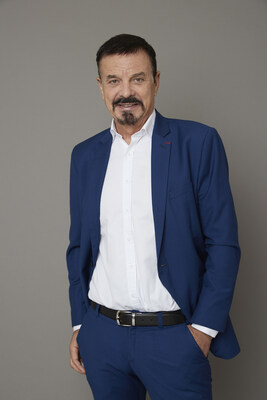

Photo - https://mma.prnewswire.com/media/2997261/Clarins_Double_Serum_Foundation.jpg
Photo - https://mma.prnewswire.com/media/2997262/Dr__Olivier_Courtin_Clarins.jpg
Logo - https://mma.prnewswire.com/media/1447071/CLARINS_updated_Logo.jpg
 View original content:https://www.prnewswire.co.uk/news-releases/clarins-newly-opened-longevity-research-center-translates-30-years-of-skin-science-into-lasting-beauty-302804511.html